Try a design change
Pick a product, change its geometry and see the prediction update. Every step you take is one design variant that would normally need a full analysis or a physical trial.
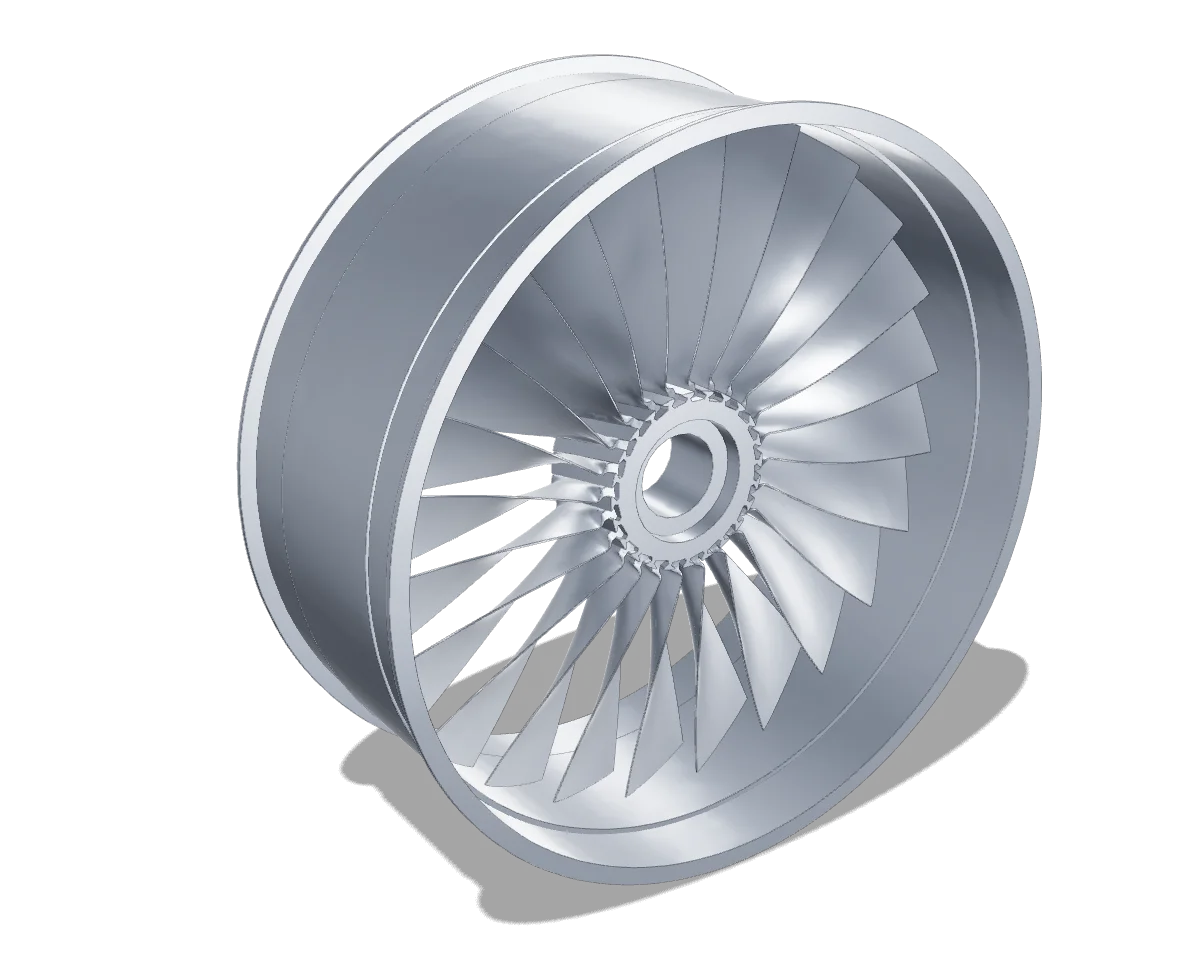
Fan blade-off impact
A 4.6 kg fan blade breaks off at 5,380 rpm, its tip moving at 437 m/s, and strikes the containment ring of the engine casing. The ring must stop it without being perforated, and certification (FAA 14 CFR 33.94) requires the engine to prove it in a blade-off test. Reaching that test takes many candidate rings, each checked by an explicit impact simulation of large plastic deformation, damage and tearing within 5 ms, about an hour of computing per design. Fainite predicts the outcome of each ring in minutes. Try it: change the ring and find the lightest one the blade does not hole.
Pick a design on the right, then run the analysis.
- Designs you evaluated
- 0
- Conventional solver
- –
- With Fainite
- –
Each blade-off event here took 52 to 62 minutes on an 8-core server: an explicit OpenRadioss simulation of 5 ms for a three-blade sector, with Johnson-Cook plasticity and damage. The damage model’s failure strains are regularised for the element size and calibrated against NASA ballistic-limit tests (NASA/TM-2013-217869). These runs judge the ring alone: blade material that slides off it onto the casing barrels is not stopped there, so containment of the whole casing is not assessed. The full rotor takes 3.3 hours.
AI chip package warpage
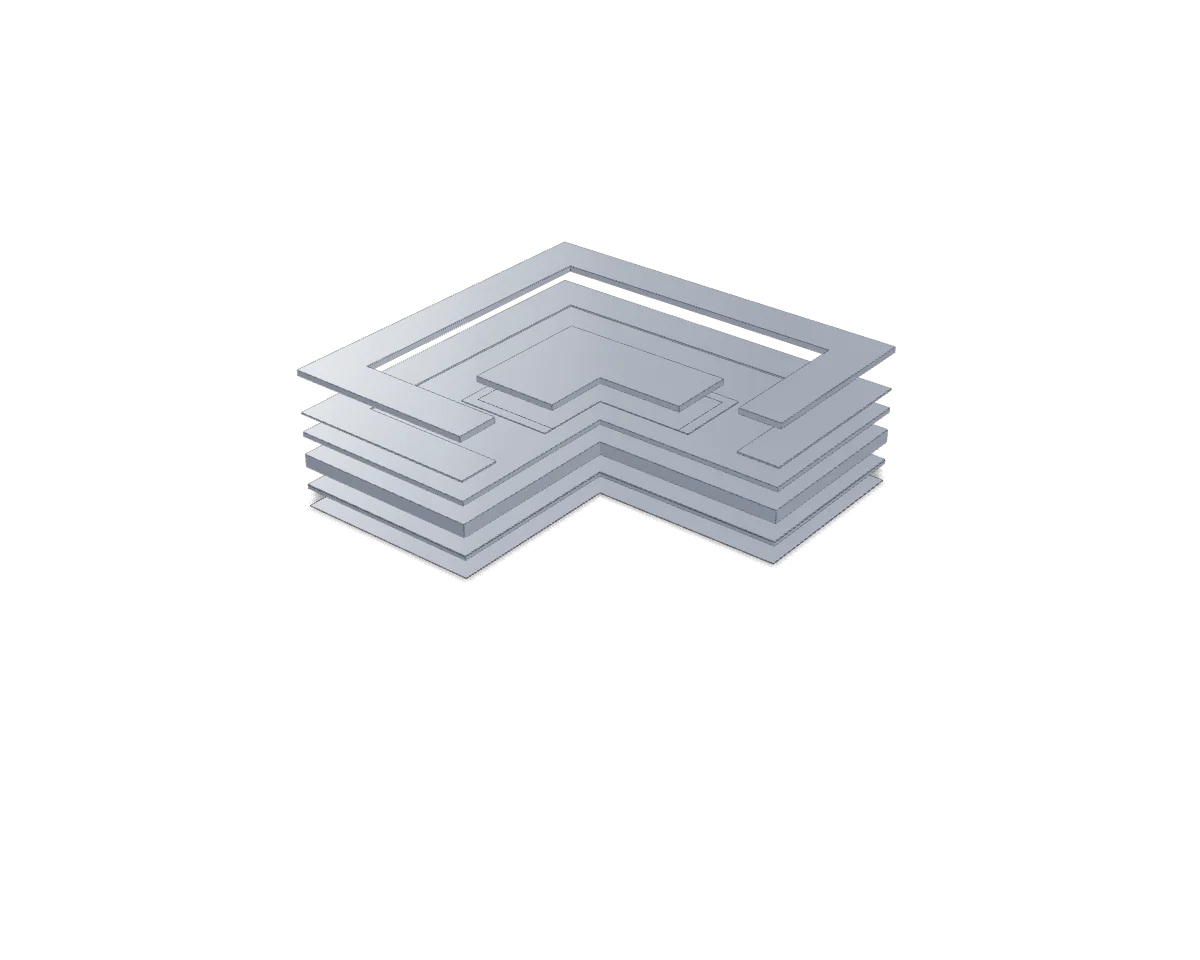
An AI accelerator chip is packaged by bonding its silicon die onto an organic substrate with solder bumps and underfill. The layers are bonded at 150 to 180 °C; as the package cools to 25 °C, silicon contracts far less than the layers around it, and the mismatch bends the package. Warpage governs board-level assembly yield: excess warpage at reflow leaves solder joints open or bridged. Each design takes 2 to 3 hours of thermo-mechanical finite-element analysis; Fainite predicts it in minutes. Try it: change the package and see its warpage at 25 °C against the JEITA ED-7306 room-temperature reference.
Pick a design on the right, then run the analysis.
- Designs you evaluated
- 0
- Conventional solver
- –
- With Fainite
- –
Each design here took 2 to 3 hours on a 4-core cloud node for a thermo-mechanical finite-element analysis from package assembly to operation, and up to 10 hours with the duty-cycle analysis. Warpage is taken over the ball field as JEITA ED-7306 defines it, against the 0.20 mm room-temperature coplanarity it lists for reference for 1.0 mm-pitch BGA; its permissible warpage at reflow temperature is 0.22 mm.
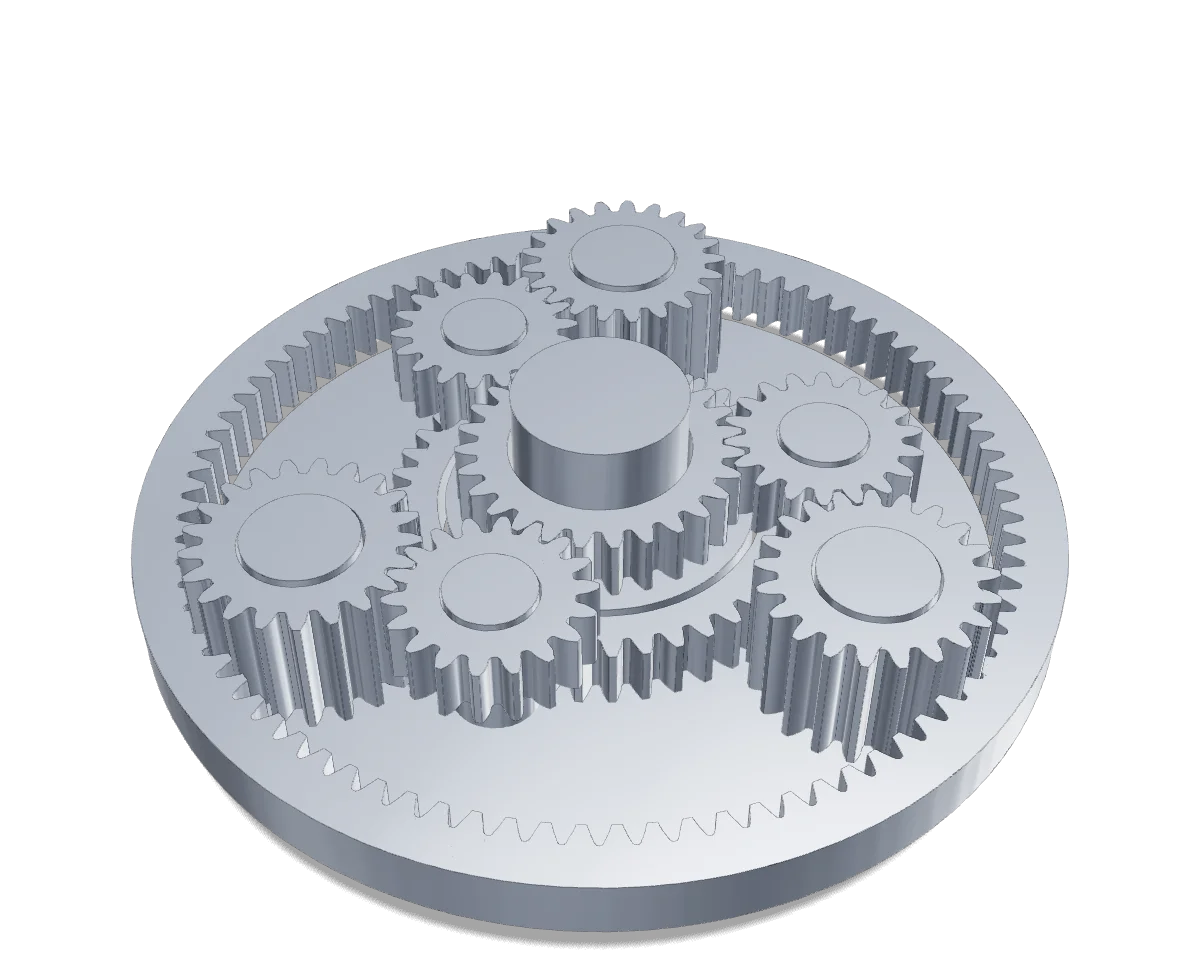
Ravigneaux gear set
A Ravigneaux gear set carries the torque of an automatic transmission through two sets of planets, short and long. Manufacturing errors in the planet pin positions make some planets carry more than their share, and the planet meshes have to be rated for the most loaded one. Compare gear sets built with different pin errors, analysed at part load in 2nd gear, and see where the load goes.
Pick a design on the right, then run the analysis.
- Designs you evaluated
- 0
- Conventional solver
- –
- With Fainite
- –
Each design here took 12 to 38 minutes for one contact solve of the whole gear set on a 16-core server, not counting meshing and setup. Rigid carrier, suns fixed to their shafts; at part load, pin errors dominate tooth deflection, so the unequal sharing is larger than at rated torque.
Illustrative examples. Real models predict full physical fields validated on your own cases.
Find out what your engineering data could do
Share one engineering challenge with us. We will show you where Physics AI saves the most time.